

"Electric bicycle" and "electric bike" get used interchangeably all the time — but if you're actually shopping for one, the difference matters more than the terminology suggests. The two terms often describe genuinely different vehicles, built for different kinds of riders. Understanding which one you actually need can save you from buying either too much bike or too little.
What's the Real Difference?
Electric bicycles are built bicycle-first. They're lighter, pedal-assist focused, and designed to feel close to riding a regular bike — just with a helpful boost. Motors tend to be smaller, the frame is closer to a traditional cycle, and the whole experience is built around pedaling with assistance, not being carried by the motor alone.
Electric bikes, in the way most Pakistani riders use the term, lean closer to a motorcycle experience. They're heavier, run stronger motors, usually offer a throttle so you can ride without pedaling at all, and are built to handle higher speeds and longer distances with less physical effort from the rider.
Neither is objectively "better" — they're built for different priorities. The right choice depends on how you actually plan to ride.

When an Electric Bicycle Makes More Sense
An electric bicycle is usually the better fit if:
- You want exercise, not just transportation. Pedal-assist systems still require real pedaling effort — you're riding a bike, not a motorcycle with pedals as decoration.
- You're navigating tighter city spaces. A lighter frame is easier to maneuver, park, and carry up a step or into a building if needed.
- Your budget is more limited. Electric bicycles are generally more affordable than higher-powered electric bikes, since they use smaller motors and simpler components.
- Your commute is relatively short and flat. Without a large battery or high-wattage motor, an electric bicycle handles moderate daily distances well without needing to be recharged constantly.
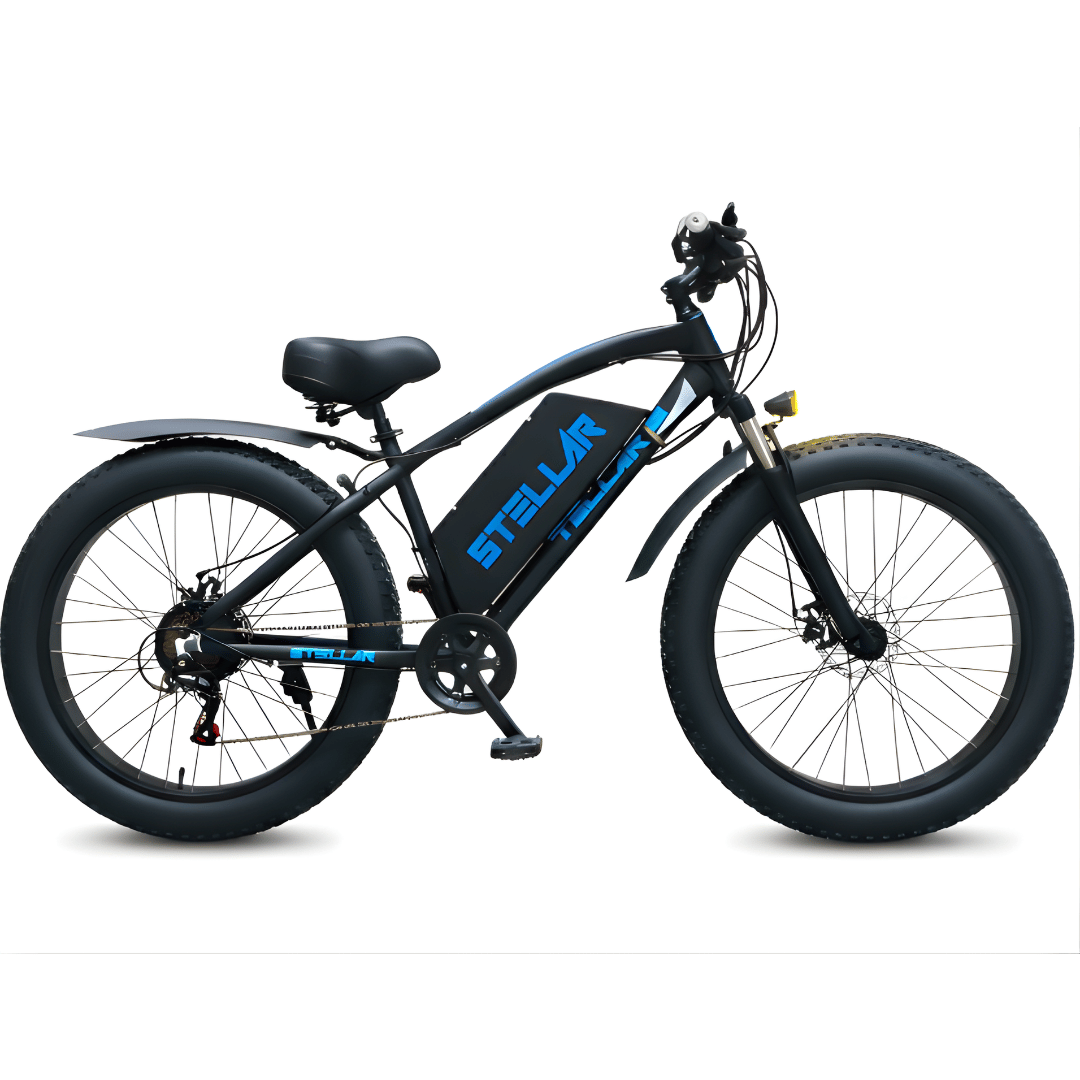
Stellar's R1 series (Standard, Sports, and Fat) fits squarely into this category — 12-16Ah batteries, 110-120kg load capacity, and a lighter, bicycle-style build designed for daily city riding.
When an Electric Bike Makes More Sense
A heavier, motorcycle-style electric bike is the better choice if:
- You want to replace a petrol motorcycle, not supplement a bicycle. Higher-wattage motors mean less physical effort and a ride that feels closer to a traditional motorbike.
- You regularly carry a passenger or extra load. More powerful motors and stronger frames handle added weight without straining.
- Your commute is longer or hillier. A bigger battery and stronger motor mean you're not relying on pedaling to get you up an incline or across a longer distance.
- You want higher top speeds. Electric bicycles are typically capped lower for safety and battery-efficiency reasons; electric bikes are built to go faster.
Stellar's R4 series (Beast and Smart) is built for exactly this — the R4 Beast runs a 1000W motor with roughly 50km of real-world range, built for riders who want power and distance without needing to pedal to get it.
Comparing the Two Side by Side
| Electric Bicycle | Electric Bike | |
| Feel | Close to riding a regular bicycle | Closer to a motorcycle |
| Effort required | Pedaling with assistance | Minimal to none (throttle-based) |
| Typical motor power | Lower wattage | Higher wattage |
| Best for | Short-to-moderate city commutes, exercise | Longer commutes, passengers, replacing a petrol bike |
| Weight | Lighter, easier to maneuver | Heavier, more stable at speed |
| Price | Generally more affordable | Generally higher, reflecting more power |
| Stellar models | R1 Standard, R1 Sports, R1 Fat | R4 Beast, R4 Smart |
A Question Worth Asking Yourself First
Before deciding, it helps to answer one honest question: are you trying to replace walking and short trips, or are you trying to replace a petrol motorcycle entirely?
If it's the former, an electric bicycle will likely serve you better — it's lighter, cheaper, and gives you a bit of exercise along the way. If it's the latter, you'll probably find a lower-powered electric bicycle frustrating on longer routes or inclines, and a proper electric bike will feel much closer to what you're used to.
Frequently Asked Questions
Is an electric bicycle legal to ride in Pakistan without a license?
This depends on the motor's power output and whether it includes a throttle. Lower-powered, pedal-assist-only electric bicycles are sometimes treated differently from higher-wattage electric bikes under provincial rules — it's worth checking with your local Excise & Taxation office, since requirements vary and continue to evolve alongside the national EV policy.
Which lasts longer on a single charge — an electric bicycle or an electric bike?
It depends more on battery capacity (Ah) and how the bike is ridden than the category alone. Higher-powered electric bikes tend to have larger batteries to match their motors, which can offset the extra power draw — Stellar's R4 Beast, for example, gets around 50km per charge despite its 1000W motor.
Can I upgrade from an electric bicycle to an electric bike later?
Not directly — they're different machines, not different settings on the same bike. Most riders instead decide based on their current needs and upgrade by purchasing a different model later if their requirements change.
Which is cheaper to maintain, an electric bicycle or an electric bike?
Electric bicycles generally have simpler, lower-power components, which can mean marginally lower maintenance costs over time — though both are far cheaper to run and maintain than a petrol motorcycle either way.
Find the Right Fit
Whether you're after the lighter, pedal-assist feel of an electric bicycle or the power and range of a full electric bike, Stellar builds both: Browse the full lineup →
Not sure which category fits how you actually ride? Message us on WhatsApp at 0344 4756052 — happy to help you figure it out before you book.